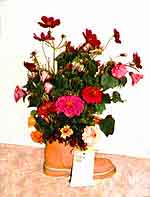
A show class defines what may be entered. A theme suggests the idea an arrangement should communicate. Begin with the current schedule: it decides dimensions, required materials, accessories, and whether the design is viewed from one side or all around.

For a theme such as “April in Paris,” make a word cloud:
- colours, weather, places, shapes, textures, music, art, or a personal memory;
- plant material already growing legally and safely in your garden;
- a reusable container or accessory that strengthens one idea; and
- one sentence describing what the viewer should notice first.
Sketch three different interpretations, then choose the clearest one—not the one with the most objects. Research can include library books, museum collections, and child-safe web searches with an adult, but copy no artist's arrangement exactly.
Check the rules again before cutting anything. The organizer settles questions about artificial material, endangered plants, flags, candles, food, electrical parts, and size. A strong theme is visible without needing a pile of props or an explanation longer than the arrangement.