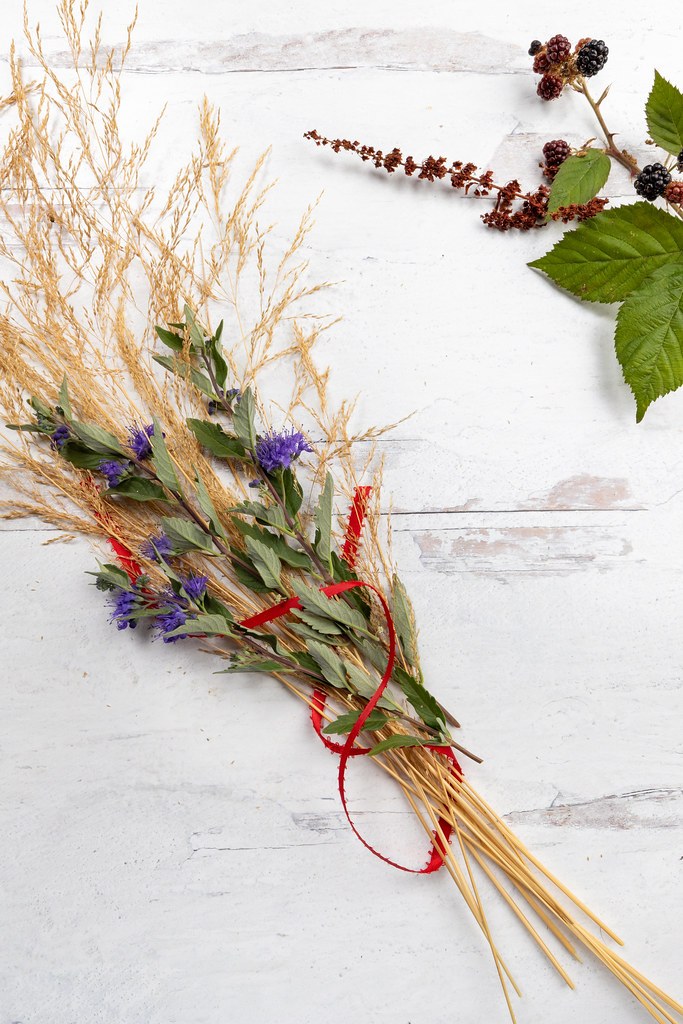
This is where you get to use your imagination. A few different shapes—perhaps a round flower, a tall stem, and airy foliage—can make an arrangement more interesting than a little bit of everything.
Start in a Garden You Know
- Ask permission before cutting anything, even in your own household's garden.
- Choose flowers and foliage an adult can identify. Calendula, cosmos, dahlias, zinnias, herbs, and non-toxic vegetable foliage can all be interesting.
- Let an adult make woody cuts with clean pruners and show you where a shrub can spare a branch.
- Check every stem for thorns, irritating sap, insects, and diseased patches. Wash your hands after handling plant material.
- Keep berries, seed pods, and every other plant part out of your mouth. Some attractive garden plants are poisonous.
- Leave rare, protected, or unfamiliar plants where they grow.
Skip Roadside Foraging
Roadsides and ditches may look like a handy source of free flowers and foliage, but think again. They bring traffic danger, permission questions, vehicle pollution, and possible pesticide exposure. White umbrella-shaped flowers can also be confused with highly poisonous hemlock, and some lookalikes can cause severe skin reactions.
Use material grown in a known garden, bought from a florist, or supplied by the show's organizers instead.
Keep the theme and support system in mind as you select. Choose only what you expect to use so the rest can keep growing for pollinators and other visitors.