Lilacs set next year's flower buds soon after this year's flowers fade. Do ordinary pruning promptly after bloom; late-summer or winter pruning removes many of those buds.
Pruners, loppers, and saws are adult tools. Wear eye protection, keep children outside the branch-fall area, inspect overhead wires, and use a qualified arborist for large, high, split, or hazardous stems.
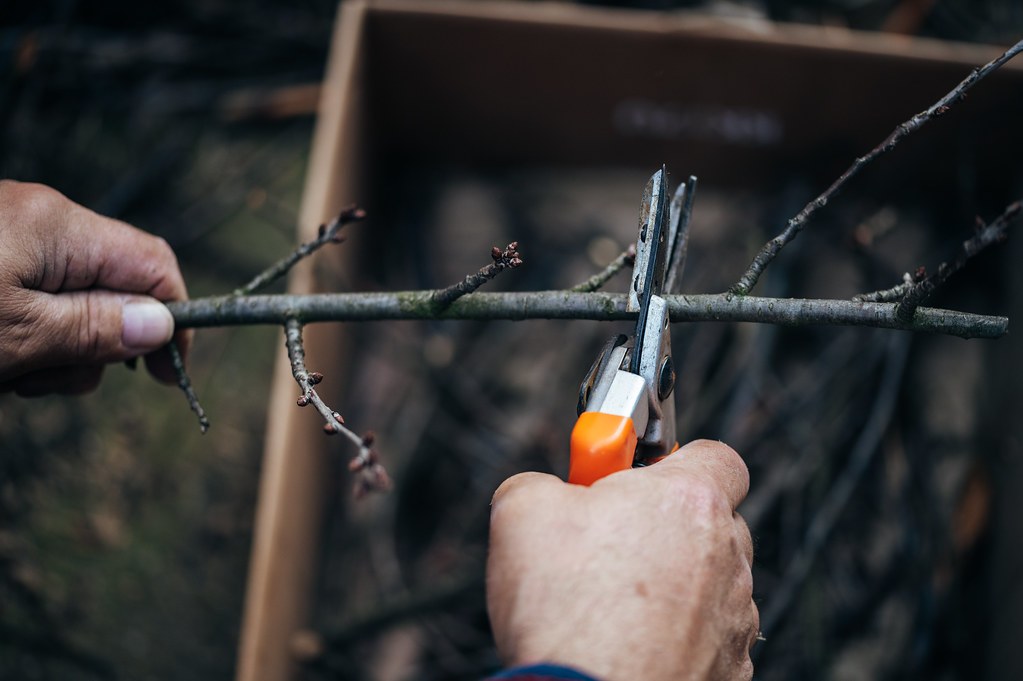
A Gentle Annual Renewal
- First remove dead, diseased, broken, crossing, and rubbing stems.
- On an old, crowded common lilac, remove up to one-third of the oldest, thickest trunks at ground level.
- Repeat in following years until sunlight reaches the base and vigorous younger stems make up the shrub.
- Keep enough well-spaced new stems to replace the old ones. There is no universal “eight branches” or exact sucker count.
- Cut fading flower heads back to a pair of leaves if desired, taking care not to remove long sections of leafy stem.
Do not remove every sucker automatically. New basal stems are how a common lilac renews itself. On a grafted plant, however, shoots from below the graft may be a different rootstock and should usually be removed—check the label or ask the nursery.
Some smaller lilacs can tolerate complete rejuvenation in late winter, but they may not flower for one or two years. That drastic method is not appropriate for every species or a weak shrub. Gradual renewal is the safer general lesson.
Make clean cuts just outside a branch collar without leaving a long stub. Wound paint is normally unnecessary. Clean the tool between diseased plants and dispose of infected branches as local guidance recommends.