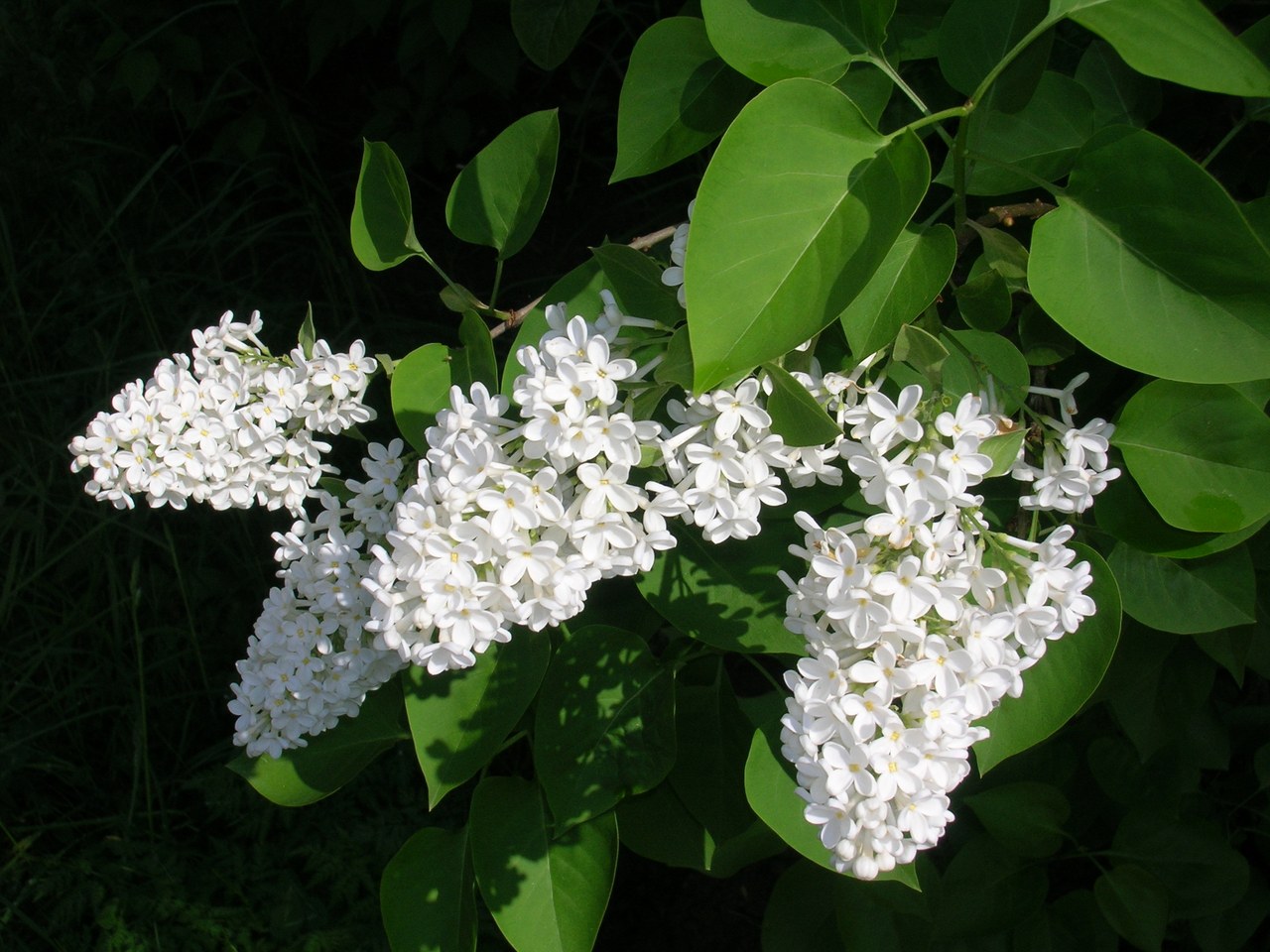
Flower colour is only the beginning of a good lilac choice. Compare:
- winter hardiness for your location;
- mature height and width, including room around wires and paths;
- early, middle, or late bloom time;
- fragrance—the strongest scent is not guaranteed by colour;
- resistance to powdery mildew and bacterial blight; and
- whether the plant forms many suckers or stays compact.
Four examples that show the range are:
- Syringa vulgaris ‘Sensation’: purple florets edged in white on a large common lilac.
- S. vulgaris ‘Krasavitsa Moskvy’ (Beauty of Moscow): pink buds opening to pale double flowers.
- Syringa × hyacinthiflora ‘Pocahontas’: an early-blooming, violet-flowered hybrid.
- Syringa × prestoniae ‘Donald Wyman’: a later-blooming Canadian hybrid with lavender-pink flowers.
Names and sizes on internet lists are sometimes copied incorrectly. Use a current nursery label or botanical-garden catalogue for the exact cultivar, then space it for that listed mature width rather than using one six-foot rule for every lilac.
Combining lilac species and hybrids with different bloom times can extend the display from mid-spring toward early summer. Planting still depends on the site: full sun, drainage, and enough room matter more than a fancy name.