Start with certified, disease-free seed potatoes from a garden supplier rather than grocery potatoes. A whole small seed potato can be planted as it is. An adult may cut a larger one into blocky pieces, each with at least one sound eye, and let the cut surfaces dry before planting.
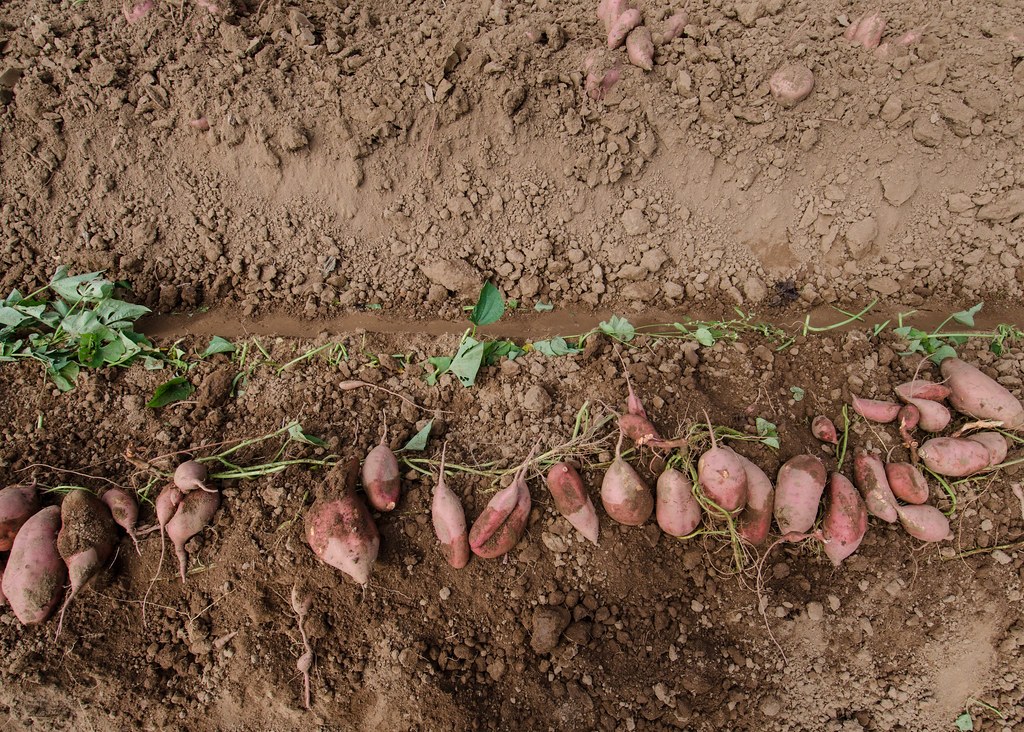
- Plant when spring soil is workable and at least about 7°C (45°F), using the variety and local forecast—not a fixed calendar day.
- Set pieces cut-side down, about 3 to 5 inches (8 to 13 cm) deep and roughly 12 inches (30 cm) apart. Follow the supplier's directions when they differ.
- When stems reach about 6 to 8 inches (15 to 20 cm), pull several inches of soil around them. Repeat as needed so every developing tuber remains covered.
- Water consistently while tubers are forming, but keep the soil drained.
- Watch for Colorado potato beetles and identify a problem before choosing a control.
Light makes potato skin green and can be accompanied by increased natural glycoalkaloids. Do not eat green, badly damaged, or bitter potatoes. Cover exposed tubers promptly.
Small “new” potatoes can be harvested after flowering. For mature storage potatoes, wait until the tops have yellowed and died back, then ask an adult to loosen the soil carefully with a fork. Let sound tubers cure in a dark, ventilated place and store them cool and dark—not in sunlight or a warm, dry room. Wash them before cooking rather than before storage.