Bark Black Plastic Cardboard Grass Clippings Hay & Straw Landscape Fabric Leaves Newspaper Pine Needles Wood Chips
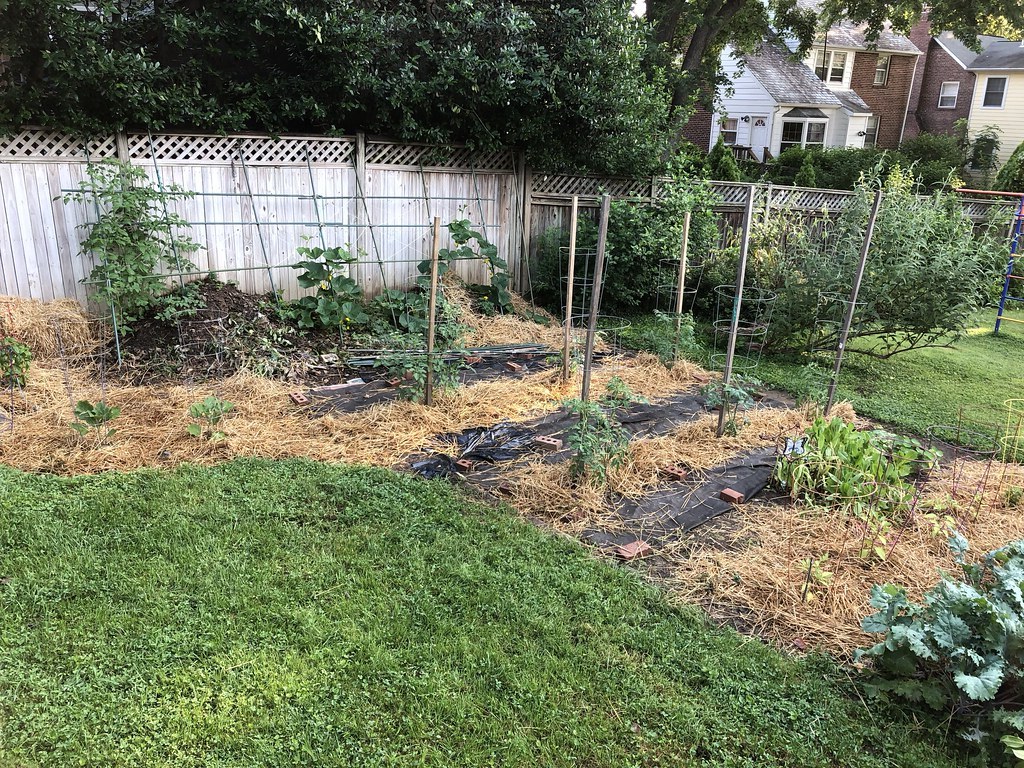
Mulch is a protective layer placed on top of soil. The right material can:
- slow water evaporation;
- reduce the number of weed seeds that germinate;
- protect soil from heavy rain, crusting, and erosion;
- moderate rapid soil-temperature changes;
- keep soil from splashing onto leaves and food crops; and
- add organic matter as leaves, straw, compost, bark, or chips decompose.
How to Mulch
- Pull established weeds and water dry soil before covering it.
- Match the material to the job. Straw, leaves, compost, and thin layers of grass clippings suit many vegetable beds. Bark and wood chips last longer around trees, shrubs, and perennial beds.
- Use a moderate, even layer. Too little will not block light; too much can keep water and oxygen from roots.
- Leave breathing room around stems. Around a tree, keep at least 6 inches (15 cm) next to the trunk bare; some tree guides recommend an even wider ring.
- Check beneath the mulch before watering. The surface may look dry while the root area is still damp.
- Top up only after checking what remains. More is not automatically better.
There is no universal calendar date for mulching. In spring, a thick layer can slow soil warming, which matters for heat-loving crops. In hot or dry weather, that same cooling and moisture conservation may help. Let the crop, soil temperature, and weather guide you.