Hay is cut grass or legumes intended as animal feed. Straw is the dry stalk left after a grain crop is harvested. Both can cover soil, but clean straw is usually the more predictable vegetable-garden mulch because it carries fewer seeds.
- Ask the supplier whether the material is weed-free and whether the field was treated with a persistent herbicide. If its history is unknown, compost a small sample with beans or peas as a test before spreading it through a food garden.
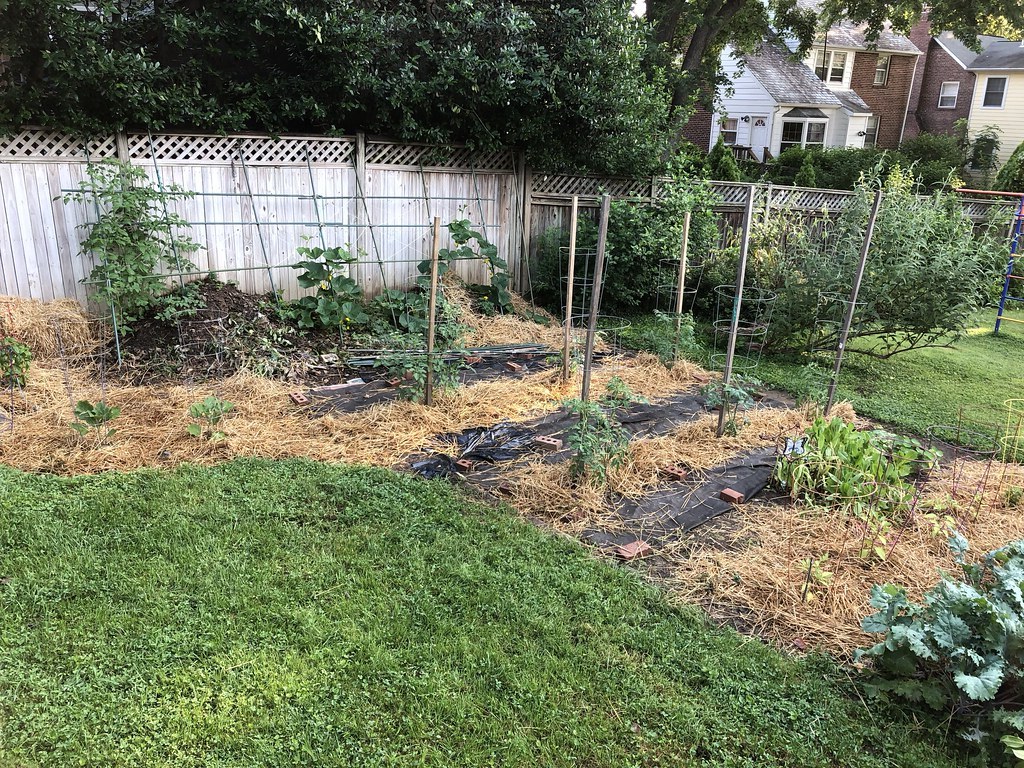
- Shake out flakes into a loose, even layer rather than placing dense slabs that block rain.
- Keep mulch a little away from stems and check underneath before watering.
- Watch for grain or hay seedlings and pull them before they establish.
- Add the weathered material to compost or leave it to decompose at the surface after harvest.
Hay does not guarantee that weeds underneath cannot sprout; it may import additional seed. Straw contains less nitrogen than hay and is not a complete fertilizer. Both mainly work as surface cover and add organic matter slowly.
Bales are heavy and can hide wire, sharp stems, mold, and animal waste. An adult should move and open them while wearing gloves and a dust mask if the material is dusty or moldy. Do not use moldy material around a child with asthma or allergies.