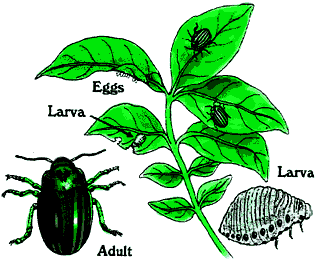
Colorado potato beetles eat potato leaves. Heavy feeding can strip a plant of leaves, especially while its tubers are beginning to grow. They may also feed on eggplant, tomatillo, and other plants in the nightshade family.
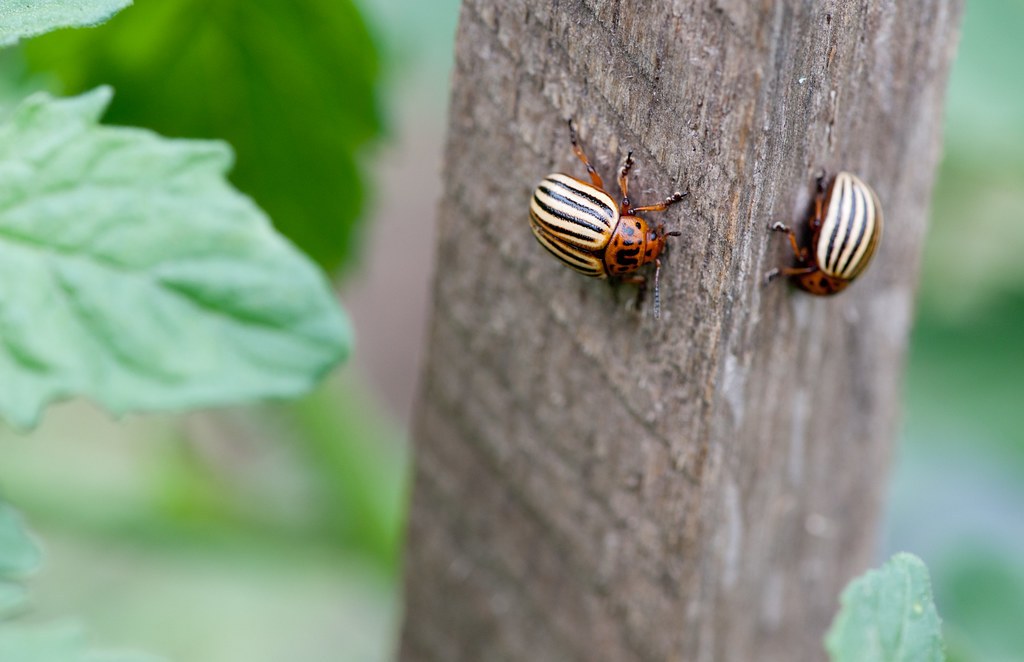
Meet the beetle
- Adults are oval, about ⅜ inch (9.5 mm) long, with yellowish wing covers marked by ten narrow black stripes.
- Females lay clusters of yellow-orange eggs on the undersides of leaves.
- Young larvae are brick red; older larvae are pink or salmon coloured. Both have black heads and two rows of dark spots along each side.
- Adults spend winter underground and emerge around the time potato shoots appear.
The name “potato bug” is also used for an unrelated insect called a Jerusalem cricket. The striped beetle shown on this page is the Colorado potato beetle.
Protect a small potato patch
- Look under leaves every few days, beginning when shoots emerge. Early action is easier than dealing with a large population.
- Ask an adult to help knock adults and larvae into a pail of soapy water. Remove or crush egg clusters.
- Mulch between plants and clean up the planting at the end of the season to make the garden less welcoming.
- Grow potatoes in a different location from the previous year when possible.
- A floating row cover can prevent beetles from reaching plants when it is installed before beetles appear and the potatoes are in a new location. Remove it during hot, humid weather if it is encouraging disease.
- An early-maturing potato variety may avoid some midsummer beetle damage.
Colorado potato beetles have developed resistance to many pesticides, so a pesticide that once worked may be ineffective. This children’s guide does not recommend a particular chemical or homemade mixture. If physical controls are not enough, ask a knowledgeable adult or local extension service about a product currently registered for potatoes in your area. An adult must read and follow the complete label, including protective clothing and the waiting time before harvest.
Fascinating Facts!
- The Colorado potato beetle’s scientific name is Leptinotarsa decemlineata.
- “Decemlineata” refers to the ten dark lines on its wing covers.
- A female can lay hundreds of eggs during her adult life.
- The hungriest older larvae cause most of the feeding damage.
- Lady beetles and some stink bugs eat Colorado potato beetle eggs, although natural enemies may not control a large population by themselves.