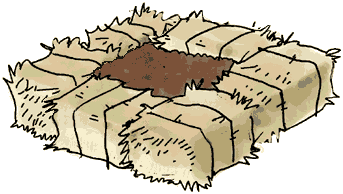
The original “hay garden” called for 8 to 16 heavy bales, excavation, unknown topsoil, cut bale twine, and fertilizer. It was not really a quick children's garden, and hay can carry weed seed or persistent herbicide residue. Here is a smaller no-dig version.
Build with an Adult
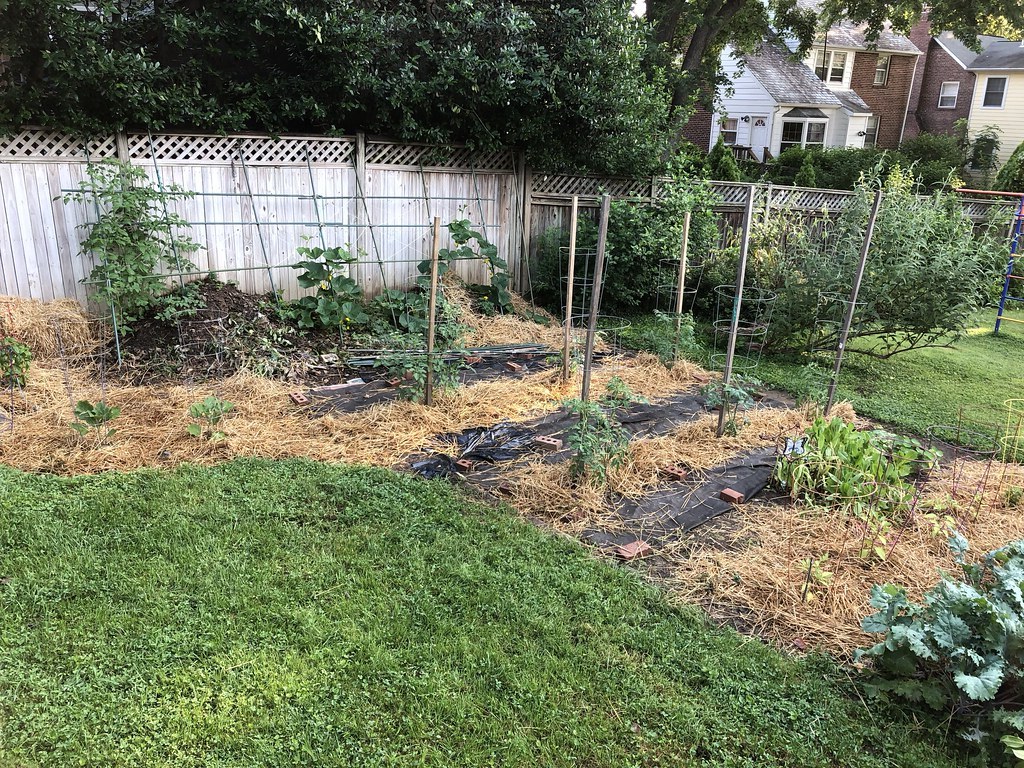
- Choose a modest, level site with permission. Check sun, drainage, underground utilities, and access to water.
- Mow or flatten the grass. Remove spreading weeds such as bindweed rather than trapping them in the bed.
- Lay overlapping plain cardboard over the ground. Remove tape, labels, staples, and glossy coatings, then wet it thoroughly.
- Add a blend intended for raised beds or a tested loamy topsoil. Compost alone is not a complete raised-bed soil.
- For a new bed, mix a 3- to 4-inch (8 to 10 cm) layer of mature compost into the upper 8 to 12 inches (20 to 30 cm) of the soil layer.
- Top the surface between plants with clean straw, shredded leaves, or another suitable mulch.
- Water, then wait for the bed to settle before planting. Follow seed packets and local frost guidance.
An adult should move soil and compost in small loads and stop before straining their back. Ask suppliers what feedstocks are in compost and whether they control persistent herbicide contamination. A pea or bean bioassay can test a questionable batch before it reaches the whole garden.
No-dig does not mean no care. Check moisture, weeds, settling, and nutrient recommendations from a soil test each season.