Hand pollination is a plant-breeding experiment: move pollen from one chosen parent to a compatible flower, exclude other pollen, save the seed, and grow the next generation. The result is not guaranteed to set seed—or to look better.
Ask an experienced adult to choose one non-patented flower species and learn its anatomy and timing. Avoid toxic plants, pesticide-treated flowers, and pollen that triggers an allergy.
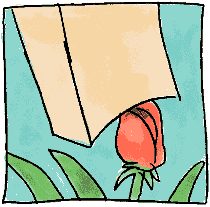
- Select an unopened seed-parent flower and a compatible pollen-parent flower of the same species.
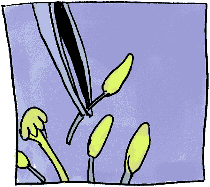
- Before the seed parent sheds its own pollen, an adult can remove its anthers with clean tweezers without damaging the stigma. This is unnecessary for species with separate male and female flowers.
- Cover both flowers with breathable paper or mesh bags and label their cultivar names.
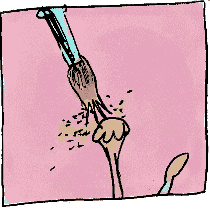
- When the pollen parent sheds ripe pollen and the seed parent's stigma is receptive, transfer pollen with a clean, dry brush.
- Re-cover the seed parent and attach a durable label in the form “seed parent × pollen parent,” plus the date.
- Let the fruit or seed head mature normally. Collect and store the seed as its species requires.
- Grow several offspring and compare them with both parents in the Garden Journal.
Traits can separate in surprising combinations, especially when either parent is already a hybrid. Saving seed from a favourite open-pollinated flower may preserve a general type, but nearby compatible pollen can still add variation. You may nickname your experiment, but formally naming and selling a cultivar requires years of testing and additional rules.