Saving seeds is a way to follow a plant through its whole life cycle. Tomatoes, peppers, peas, and beans are good vegetables for a beginner because they usually pollinate themselves. Many flowers are also easy to collect once their seed heads are brown and dry.
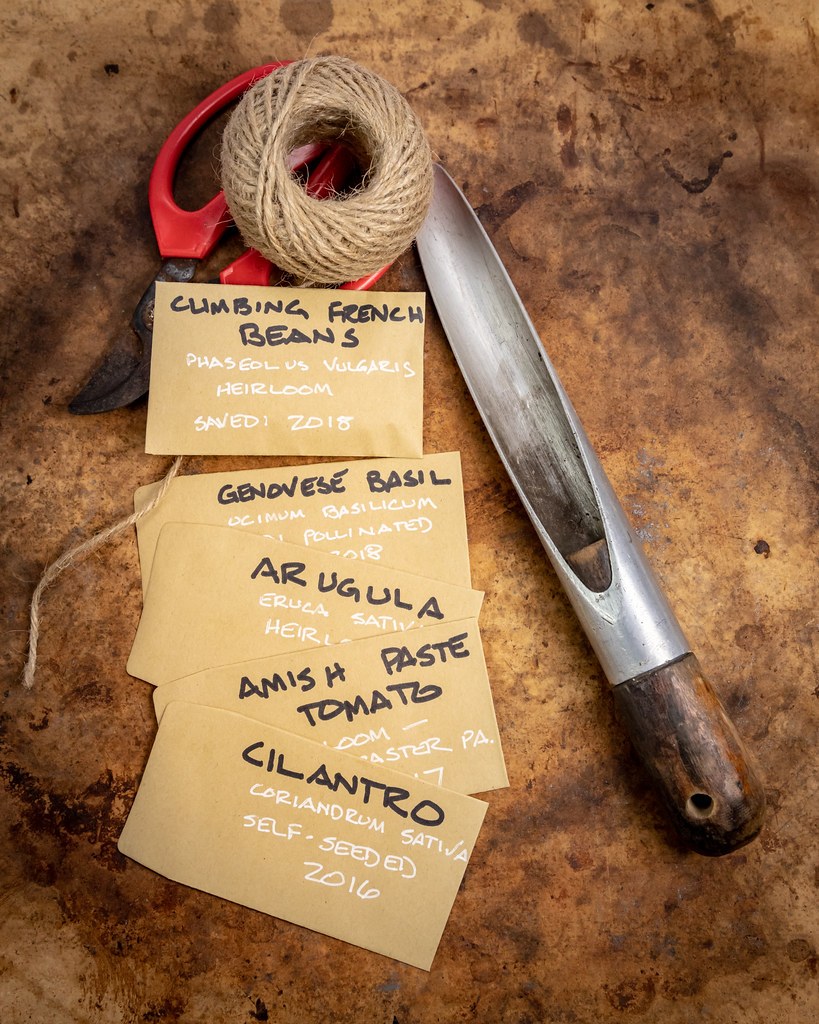
Choose healthy, vigorous plants. If you hope to grow a similar plant next year, start with an open-pollinated variety. A hybrid can make perfectly good seed, but its seedlings may look or taste quite different from the parent. Corn, cucumbers, squash, pumpkins, and other cross-pollinated plants may also produce surprises when nearby varieties exchange pollen.
Collecting Seeds
- Let flower heads or pods mature on a healthy plant. Pea and bean pods are ready when they are brown, dry, and the seeds rattle inside.
- Collect on a dry day. Break open dry heads or pods over a paper bag or tray.
- Spread the seeds out indoors until they are completely dry. Peas and beans should dry for at least two weeks before shelling.
- Put each kind in a paper packet. Write the plant, variety, colour or other special trait, and collection year on it.
- Place the packets in a tightly sealed jar or other airtight container. Store it somewhere cool and dry; a refrigerator works well if an adult gives the container a safe place.
- A new, sealed silica-gel packet can help keep the container dry. Ask an adult to handle it, keep it sealed, and follow its warning label. Never eat a desiccant, heat one in an oven, or reuse an unknown packet from a product box.
- Try the seed the following season. Some kinds last longer, but germination and vigour usually fall as seed ages.
Seed Pods
Beans and peas grow seeds inside a seed pod. Other plants, including roses, make different kinds of seed-holding fruit. The seed coat protects a tiny plant embryo and a store of food.

Collect only seed you can identify. Decorative plants can have poisonous seeds, and seed saved from a diseased plant may carry trouble into next year's garden. All saved seed is for planting, not eating.
A Tomato Exception
Tomato seeds are surrounded by gel, so they need a different method. Scoop the seeds and gel from a fully ripe, healthy tomato into a jar with a little water. Ask an adult to help. Stir it twice a day; within about five days, good seeds should sink. Pour off the liquid, rinse the seeds, and spread them out to dry completely before packing and labelling them.