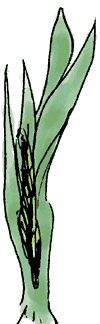
European corn borers are moth caterpillars that tunnel into corn stalks and ears. Their numbers are now low in many areas, so do not assume that every damaged ear contains this insect. Corn earworms and sap beetles can also chew kernels.
Look for clues
- Small “shot holes” appear across leaves after a folded leaf grows and opens.
- A tunnel in the stalk may have a small entrance hole with brown, sawdust-like waste called frass.
- A weakened stalk may bend or fall over.
- Kernels may be partly or completely chewed.

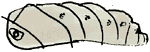
The mature caterpillar is about 1 inch (2.5 cm) long, light brown or pinkish gray, with a brown head and rows of small dark spots.
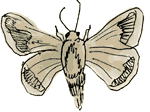
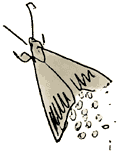
Adults are pale yellowish or brown moths with wavy dark bands on the wings. Females lay overlapping groups of creamy white eggs, often on the undersides of leaves.
What a home gardener can do
- Grow a sweet-corn variety that matures in fewer than 80 days if borers have been a repeated problem locally. Early crops may avoid more insect activity.
- Inspect damaged plants before deciding what caused the problem.
- After harvest, remove or finely chop badly infested stalks so larvae have fewer protected places to spend the winter. Ask an adult to handle pruners or chopping tools.
- A healthy hot compost pile can receive chopped plant residue; cold, neglected piles may not reliably kill every overwintering pest.
If an ear contains a caterpillar, ask an adult to cut away the damaged part and cook the unaffected kernels. A home garden seldom needs a pesticide for European corn borer; local extension advice is better than an old product recommendation.
Fascinating Facts!
- The European corn borer’s scientific name is Ostrinia nubilalis.
- It was introduced to North America in the early 1900s.
- It feeds on corn and can also tunnel into several other crops and weeds.
- Larvae survive winter inside protected plant stems and residue.
- Widespread growing of corn varieties that resist the insect has greatly reduced populations across much of the United States and Canada.