Sweet corn loves sun, warm soil, and plenty of water. Kandy Korn is one of many sweet-corn varieties; seed packets tell you how long each variety usually takes to mature and how warm its soil must be.
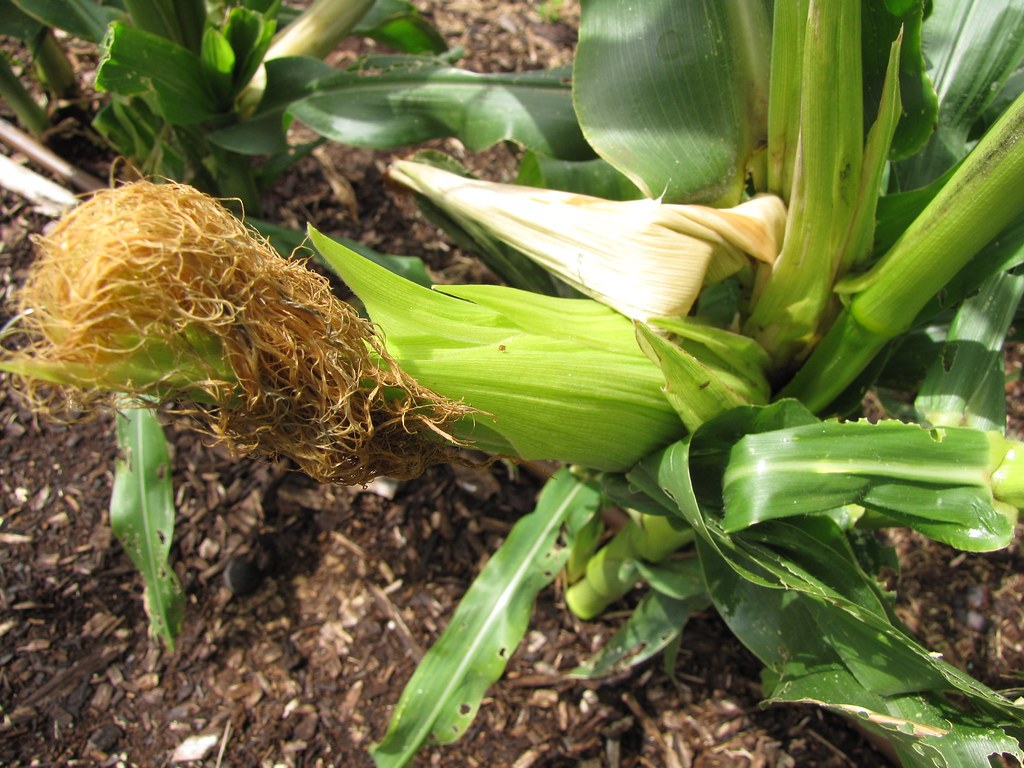
- Wait until the soil is warm enough for the variety on your seed packet. Corn planted in cold, wet soil may germinate poorly.
- Plant corn in a block of at least four short rows, not one long row. Wind carries pollen from the tassels to the silks, and a block gives the pollen a better chance of reaching every plant.
- A useful starting point is 1 inch (2.5 cm) deep and 8 to 12 inches (20 to 30 cm) apart, with 30 to 36 inches (75 to 90 cm) between rows. Follow your packet if it gives different spacing.
- Keep the seedbed moist until shoots emerge. Established sweet corn generally needs about 1 inch (2.5 cm) of water each week, and sandy soil may need water more often.
- Use a shallow hoe or hand tool for weeds so you do not damage corn’s roots.
- Harvest when the kernels in the middle of an ear look full and release a milky liquid when squeezed. The silks are usually brown and dry by then.
Check the seed packet
Some corn seed is treated with a pesticide and dyed a bright colour. The package must say when seed is treated. Ask an adult to read and follow the seed tag, avoid making dust, clean up spills, and wash their hands afterward. Treated seed is for planting only—never for eating or feeding to animals. Keep every kind of seed away from very young children.

Raccoons may eat ears as they ripen. A motion-activated light or sprinkler can sometimes startle a visitor without trapping or hurting it. Ask an adult for help and change tactics occasionally, because animals can get used to a single deterrent.
Fascinating Facts!
- Corn is a grain and a member of the grass family.
- Indigenous peoples in what is now Mexico domesticated corn from a wild grass thousands of years ago. Many Indigenous nations developed and shared distinct varieties and growing knowledge long before Europeans arrived in the Americas.
- Corn pollen comes from the tassel at the top of the plant. Each silk is connected to a potential kernel on the ear.
- Different kinds of corn are grown for eating fresh, popping, grinding into meal, feeding animals, and making industrial products.
- Sweet-corn types can cross-pollinate one another. That can change the flavour or texture of the kernels, so seed instructions may recommend separating varieties by distance or flowering time.