Peas, pole beans, many tomatoes, and some flowering vines grow better with support. A trellis can also keep leaves and fruit off damp soil and make a small garden use vertical space.
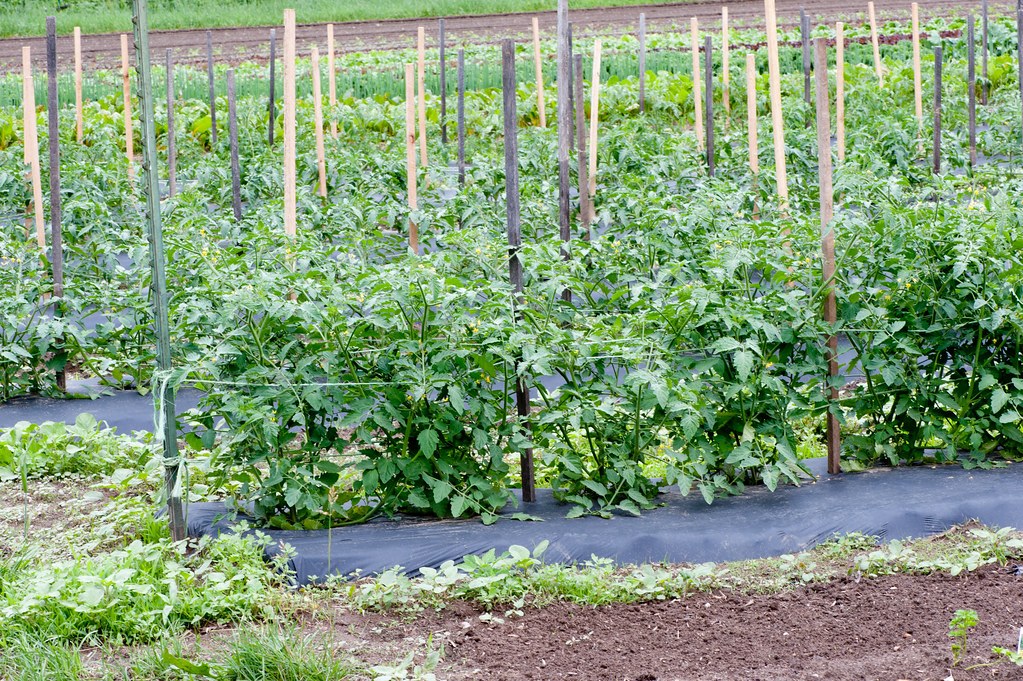
Plan Before Planting
- Read the plant description. Bush beans do not need a trellis, while pole beans do. Determinate and indeterminate tomatoes need different-sized supports.
- Match the support to the mature height, weight, and wind exposure—not a fixed fraction of plant height.
- Put cages, stakes, and trellises in while plants are small so roots and branches are not damaged later.
- An adult should pound stakes, cut wire or mesh, and check that the structure cannot tip, collapse, or expose a sharp end.
Guide, Do Not Squeeze
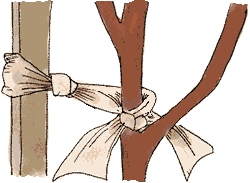
- Use wide, soft plant ties or strips of cloth in a loose figure-eight between the stem and support.
- Leave room for the stem to thicken and move in the wind.
- Check ties every week. Remove or loosen anything that rubs, cuts, or begins to girdle the stem.
- Do not put ordinary zip ties, twist ties, or bare wire directly around a living stem.
Cages and Trellises
A sturdy cage suits many compact tomatoes. Tall indeterminate tomatoes usually need a taller, stronger cage, stake, or string system. Peas and beans can climb mesh or vertical compostable twine between well-anchored posts.
Small cucumbers and squash can use a strong trellis; support a heavier fruit with a wide cloth sling. Large pumpkins and squash are usually safer on the ground.
A bean house can still be a wonderful hiding place, but an adult must design and test it as a structure children may enter. It needs a clear exit, no trip loops or sharp wire, and stakes that will stay upright in wind and wet soil.