
Testing Soil Soil pH Clay Soil Sandy Soil Conditioning Soil
Soil is more than “dirt.” A healthy garden soil contains:
- mineral particles—sand, silt, and clay;
- decomposed organic matter;
- pore spaces that can hold air or water;
- living roots, fungi, bacteria, insects, and other organisms; and
- nutrients in forms that plants may be able to use.
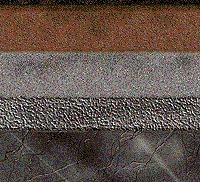
The relative amounts of sand, silt, and clay make the soil's texture. Texture is not just “clay or sand”; names such as loam, sandy loam, and clay loam describe mixtures. Texture changes little over a gardener's lifetime, but compost, roots, mulch, and careful cultivation can improve the way particles form aggregates and how water moves through them.
Soil pH describes acidity or alkalinity. It affects nutrient availability, but appearance and texture cannot tell you pH. A laboratory test is the dependable way to learn texture, organic matter, pH, and nutrient levels together.
Soil is a habitat. Protect it by keeping living roots where practical, adding only tested amendments that are needed, covering bare ground, avoiding compaction, and not digging when it is too wet.