Peanuts are warm-season legumes. Their yellow flowers grow above ground, but after pollination a stem called a peg bends down and pushes into the soil. The pod develops at its tip underground.
Allergy Check First
Peanut can cause a severe allergic reaction. Before opening seed or planting, an adult must check household, school, garden-club, and event allergy rules. Someone with a peanut allergy should avoid this activity and follow their medical plan. Keep peanut seed and plant material out of shared food areas.
Growing the Plant
- Buy peanut seed from a reputable garden supplier. Choose a variety listed at fewer than 120 days to maturity for a short northern growing season.
- Plant outside only after the soil has reached about 65°F (18°C) and frost danger has passed. Starting indoors can add time, but peanuts dislike root disturbance.
- Choose full sun and loose, sandy soil. Heavy clay makes it harder for pegs to enter and for pods to be harvested.
- Plant 1 to 1½ inches (2.5 to 4 cm) deep. Follow the packet's spacing; recommendations differ for home gardens and field production.
- Keep the seedbed evenly moist. Water regularly during flowering and pod filling, without leaving the soil soggy.
- Weed carefully and avoid deep cultivation once pegs begin entering the ground.
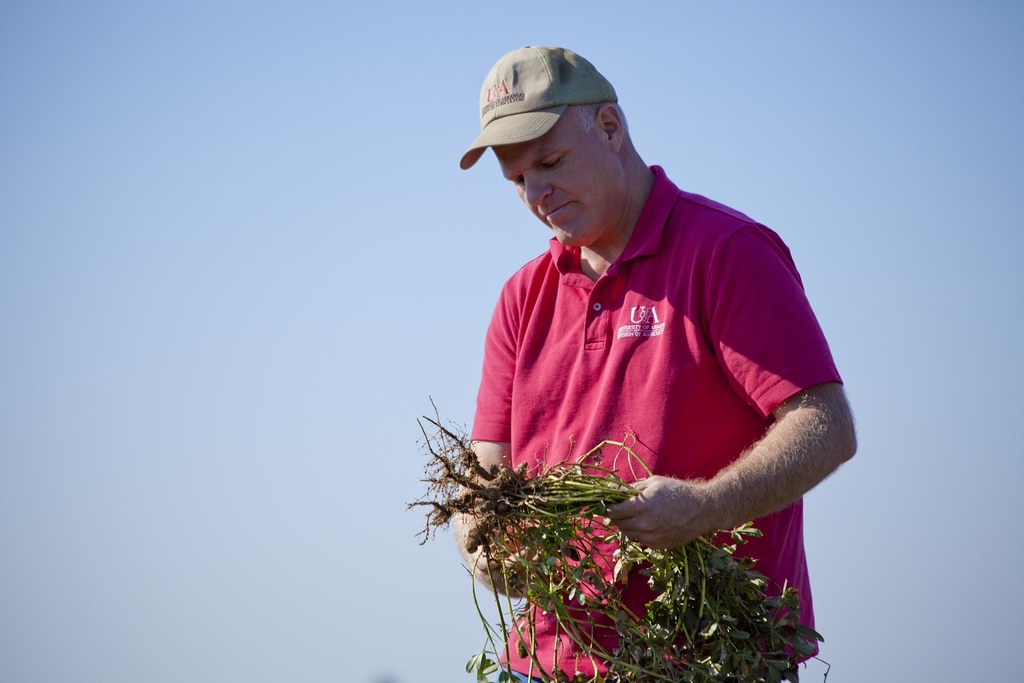
- Dig plants rather than pulling them when pods are mature or frost threatens. An adult can loosen the soil with a garden fork without spearing the pods.
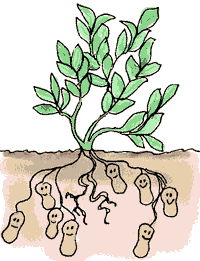
Many peanut varieties will not fully mature in a short season. Fresh peanuts for boiling may need about 90 to 110 days; fully mature peanuts for drying often need 110 to 120 days. Weather and variety matter more than a fixed calendar date.
This page is a growing experiment, not a food-processing recipe. The old version said to eat raw homegrown peanuts and supplied an unverified roasting time. Raw agricultural peanuts can carry mold toxins or microbes, and safe commercial processing uses controlled inspection and heating. Do not taste the harvest. An adult can obtain food-safety advice appropriate to the crop and local authority.
Fascinating Facts!
- A peanut is a legume, related to beans and peas, rather than a tree nut.
- The plant can work with root bacteria to obtain nitrogen from the air.
- Peanuts originated in South America and are now grown in warm regions around the world.