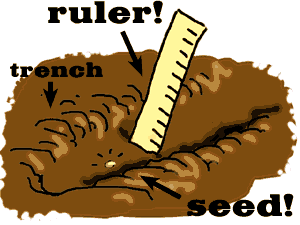
Before opening a packet, read whether the plant should be direct-sown or transplanted, its soil-temperature needs, depth, final spacing, and days to maturity.
- Work from a path so the seed bed stays loose.
- Mark a row or block. Make a furrow only as deep as the packet directs.
- Space seed as evenly as practical. Pelleted seed or seed tape can help with tiny seed.
- Cover with fine garden soil or the material recommended on the packet. Very fine seed may need only firm contact and light, not a deep cover.
- Press gently enough to remove large air gaps without compacting the surface.
- Label the crop, cultivar, and date.

Water with a fine rose or gentle nozzle until the seed zone is moist. Keep that shallow zone from drying during germination, but do not leave it saturated. Heavy spray can wash seed into piles and hard rain can crust bare soil; a light row cover may protect the surface if it is checked daily.
Planting too deep is a common reason small seed fails, while shallow large seed may dry or feed birds. The packet—not one universal rule—settles the argument.