Earwigs are reddish-brown insects with a pair of pincers at the end of the abdomen. They do not crawl into people’s ears, cannot attack with their pincers, and are considered harmless to people. They hide in cool, dark, damp places during the day and feed at night.
Earwigs eat decaying material and other small creatures, so a few can be useful. Large numbers may chew irregular holes in seedlings, corn silk, leaves, and flower petals.
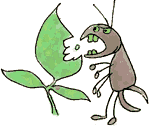
Is an earwig responsible?
- Use a flashlight to check damaged plants at night.
- Look under leaves and nearby debris during the day.
- Earwig damage can resemble slug, cutworm, or rabbit feeding. Slugs leave a slime trail; earwigs do not.
- Older plants often tolerate a little feeding, so control may not be necessary.
Reduce hiding places and moisture
- Move unnecessary boards, bricks, containers, and thick piles of dead leaves away from vulnerable plants.
- Thin very heavy mulch where earwigs are crowded beneath it.
- Fix poor drainage and water deeply but less often so the soil surface has time to dry.
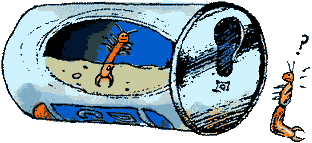
Make a newspaper trap
- Roll up a sheet of newspaper, dampen it, and place it near damaged plants in the evening.
- In the morning, shake the hiding earwigs into a pail of soapy water.
- Repeat for several nights and stop when plant damage slows.
An adult can also set a shallow, smooth-sided container with a small amount of vegetable oil as a trap. Keep any trap where pets and very young children cannot reach it, check it daily, and never leave a sharp-edged can in the garden.
Fascinating Facts!
- Earwigs belong to the insect order Dermaptera, a name meaning “skin wings.”
- Their folded hind wings are shaped like tiny fans, although many earwigs rarely fly.
- A mother earwig guards and cleans her eggs and stays with the young after they hatch.
- Earwigs are active mainly at night.
- The pincers help with defence, folding wings, and courtship; their shape often differs between males and females.